
Fellow Countrymen Again
Why the events of April 12, 1865 are important to us now

Something is happening.
Many are expressing regret for having voted for a mistake three times. This comes as the mistake for whom they voted has finally said and done things that have had a negative affect on them personally.
Self-interest is the lowest form of decision making. Things matter to them only after they have directly experienced pain, hardship, and loss. It shouldn't have to happen to them for it to matter to them, but unfortunately that's often the case.
They now regret their choice because the economy sucks, gas prices are nearing record highs across the country, and we are waging an unnecessary, unprovoked, and ill-advised war. Among many other things.
These recent converts are reporting a cold welcome from people they once called "libtard" and "radical leftists." who didn't vote for the mistake. "I'm not forgetting and I'm not forgiving," said one person who treats the new converts as disloyal and untrustworthy.
I understand the feelings of both groups, but if I'm being honest, I side more with the "not forgetting and not forgiving" group.
On April 9, 1865 Robert E. Lee surrendered to Ulysses S. Grant, ending the Civil War. Three days later, April 12, 1865, the defeated Confederate Army of Northern Virginia marched past the Union Army and laid down their rifles and headed home.
When Lee met with Grant for the surrender, Grant described the meeting this way:
"We soon fell into a conversation about old army times. He remarked that he remembered me very well in the old army; and I told him that as a matter of course I remembered him perfectly, but from the difference in our rank and years (there being about sixteen years' difference in our ages), I had thought it very likely that I had not attracted his attention sufficiently to be remembered by him after such a long interval. Our conversation grew so pleasant that I almost forgot the object of our meeting. After the conversation had run on in this style for some time, General Lee called my attention to the object of our meeting, and said that he had asked for this interview for the purpose of getting from me the terms I proposed to give his army."
Lee told Grant that his soldiers were practically starving. Grant immediately sent rations for 25,000 troops. The Union troops who took the food to the Confederate camp, stayed and sat around campfires together exchanging stories and feeling the happy relief together that the war was over. Their conversation seemed to mirror that of their two commanders.
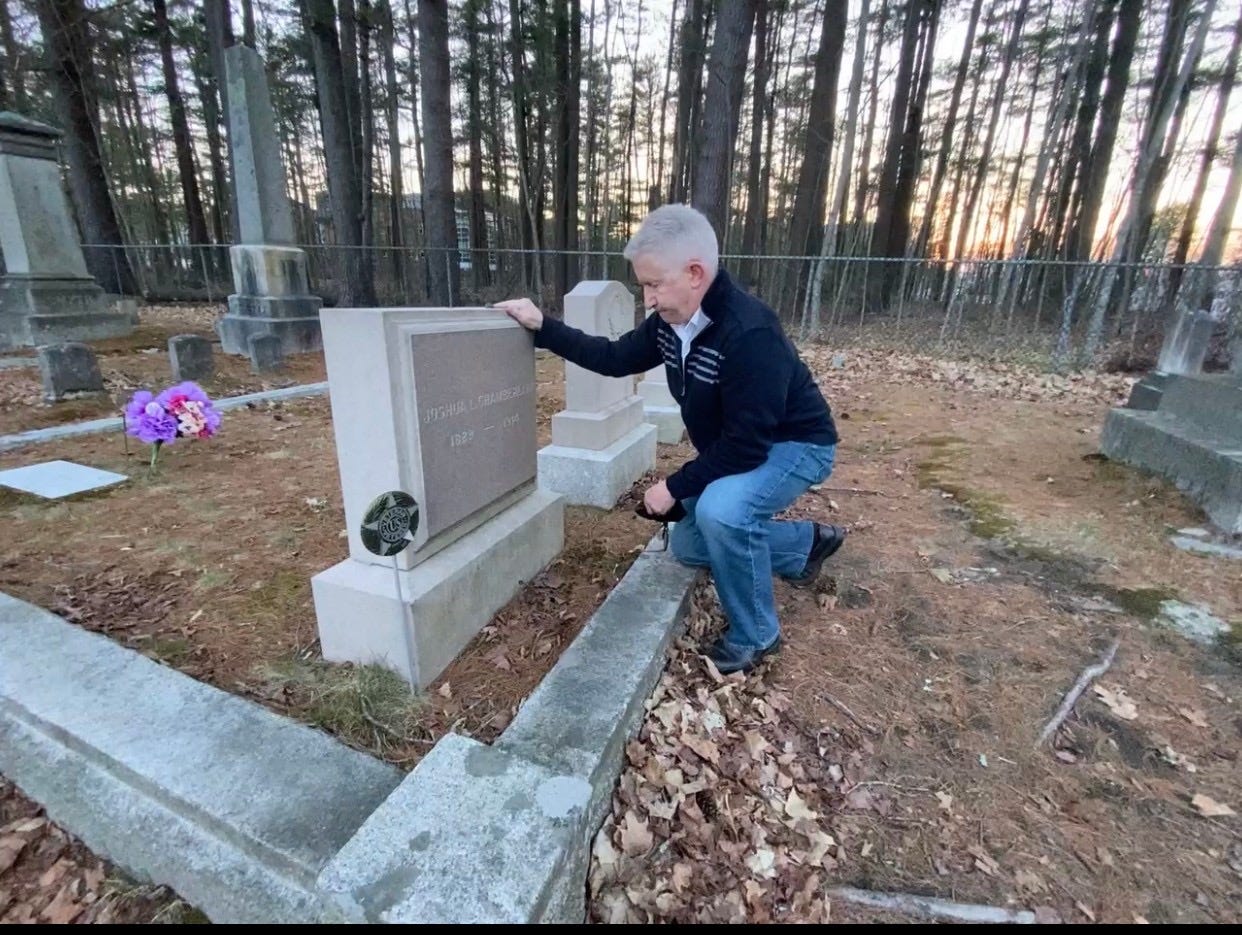
The subject of my dissertation was there. After the signing of the surrender, Lee returned to his troops and then left the field. Grant had done a similar thing, leaving the actual surrendering of the Confederate army to General Joshua Lawrence Chamberlain.
On April 12, 1865, Confederate General John Gordon marched his division past the formations of Union soldiers under the direct command of Chamberlain. Chamberlain described it this way: "when General Gordon, 'riding with heavy spirit and downcast face,' caught 'the sound of shifting arms' he looked up. 'And, taking the meaning, wheeled superbly, making himself and his horse one uplifted figure, with profound salutation,' and dropped 'the point of his sword to the boot toe.' Then facing to his own command, General Gordon gave word that each of his brigades would pass the Union formation 'with the same position of the manual [carry arms], – honor answering honor.'
Chamberlain continued, "On our part not a sound of trumpet more, nor roll of drum; not a cheer, nor a word nor whisper of vain-glorying, nor motion of man standing again at the order [order arms], but an awed stillness rather, and breath-holding, as if it were the passing of the dead."
Years later, Chamberlain wrote of Confederate bravery and courage. He described their courageous behavior and sacrifice in the same language he used to describe his own men. In recalling that scene and that moment many years later, General Gordon, in his memoir, said that Chamberlain was “one of the knightliest soldiers of the Federal Army.”
Chamberlain and other Union officers warned their men to treat the defeated Confederates with respect. They are our fellow-countrymen again, they explained.
I said all of that to say this:
In the last days of the Civil War, Union and Confederate soldiers mingled with one another. They shared stories and the Union soldiers gave the defeated soldiers items of gear and supplies for their march south.
The actual surrendering ceremony was described by all parties as a reverent and holy thing. "Honor answering honor" as Gordon wrote.
The Trump regime will come to an end and it will take years and years to repair all that has been destroyed by him. I hope that those of us who have opposed Trump from the beginning will be generous with compassion and grace to those who'd been deceived; that we will resist the urge to chastise them and shame them. I hope we'll behave with all the honor and dignity of the victorious Union Army at Appomattox and the example set by the knightly Joshua Lawrence Chamberlain.
Perfect. Those who were family before will still be family after. Honor in oneself begets honor for another.