
Do you know how to think?
Thank a philosophy professor!

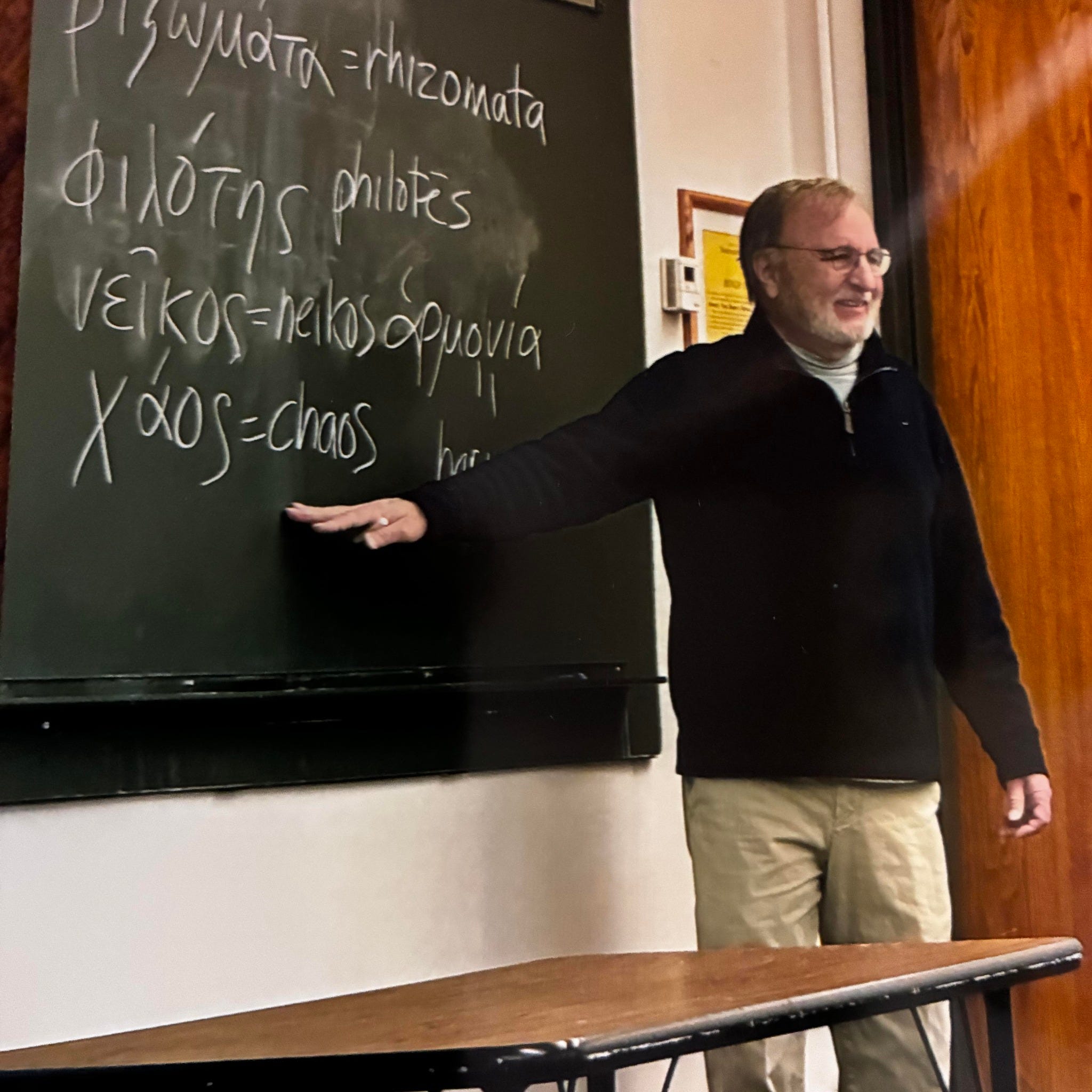
My friend, Dr. Tom Smith, professor of philosophy at the University of Northern Colorado, is retiring and has taught his last class. I’ve told him on many occasions how important his work has been.
My oldest was a philosophy and economics major. I attended some of his classes with him. (How many college students invite their father to attend classes with them?) As an undergrad, I took three philosophy classes myself, and then in 2022/23, I took three more at the U of M.
Even though I was an English and History major as an undergrad, I have come to believe that the philosophy department of most universities is the hub of a bicycle wheel — and every other discipline is a spoke.
When Matthew told people he was majoring in philosophy, some warned him it was dangerous. They told him philosophy would be detrimental to his “faith” and that professors would brainwash him. At first, he smiled and said things like, “OK, thanks, I’ll be careful.” But later, he started sounding like his old man:
“I think things are different from when you majored in philosophy.” “Oh, I never majored in philosophy,” they said. “I thought you knew all about it because you studied it yourself.” “No, I was a business major.” “How many philosophy courses did you take?” “I didn’t take any, but I saw what it did to others.” “Doesn’t your preacher do the same thing—tell people what to think?”
Here’s the distinction Matthew had learned: philosophy professors don’t tell students what to think. They teach students how to think.
Here’s the kind of thinking those classes actually teach. The professor writes on the board: “We should ban violent video games because they cause real-world violence.” Rather than declaring the statement right or wrong, the professor guides students through it step by step:
Clarify the claim. What exactly is being asserted? What does “cause” mean — direct cause, correlation, influence?
Identify the structure. Premise: violent video games cause violence. Conclusion: therefore, they should be banned.
Test the reasoning. Does the conclusion follow from the premise? Are there hidden assumptions?
Evaluate the evidence. What would support this claim? Is there conflicting evidence?
Look for fallacies. Is this confusing correlation with causation? Is it oversimplifying?
Consider alternatives. Could other factors explain violence? Are there less extreme responses than a ban?
At no point does the professor say, “This argument is wrong.” Instead, students learn to take it apart themselves — to break arguments into parts, spot weak reasoning, ask better questions, and change their minds when the evidence warrants it.
These are transferable skills. And their absence has consequences.
When I was a kid, my father and brother were working on our car and seemed baffled by whatever was wrong. With the hood up, they talked through possible causes. Wanting to be helpful, I offered, “Maybe the tires need more air.” They were patient with me. I was eight.
When Donald Trump, Bill Lee, and Kristi Noem decided Memphis needed the National Guard, ICE, and a small army of federal forces to make it safe, they never once asked the most basic question: What is the primary cause of crime here? That would have been a first-year philosophy student’s opening move. Instead, Moe, Larry, and Curly sent us a bicycle pump — confidently insisting it would fix a problem that lives under the hood.
Logic, it turns out, is also taught in the philosophy department. In 2023, I took two logic classes at the U of M and was delighted to find bright, intellectually curious students filling those rooms. The next year, I went back and took two more.
And now Dr. Tom Smith will make room for a new philosophy professor — which is the way of life. One generation steps aside so the next can step forward. I understand that. I just can’t help being a little sad about it.
You can give a person a fish and feed them for a day. Teach them to fish, and they’ll never go hungry. A high school can hand students the answers. But a great college professor teaches students how to think and leaves the answers out there for them to find on their own.
Congratulations, Dr. Smith, on an exceptional career. You’ve sent thinkers into the world.